
- All
- Product Name
- Product Keyword
- Product Model
- Product Summary
- Product Description
- Multi Field Search
- Product private attributes
Views: 0 Author: Site Editor Publish Time: 2026-10-05 Origin: Site


The commercial lighting market increasingly demands exact-fit architectural and event lighting. Standard retail-length spools fail large-scale deployments. Relying on off-the-shelf lengths forces commercial installers to splice, cut, and solder on-site. This leads to increased labor hours, excessive material waste, and heightened points of failure. Vulnerabilities include severe voltage drop, compromised waterproofing, and poor thermal management.
For wholesalers and distributors, sourcing custom configurations directly from manufacturers solves these operational bottlenecks. It protects profit margins and ensures project-specific compliance. Pre-configured lengths eliminate field modifications. This guarantees factory-sealed weatherproofing and consistent electrical performance across massive installations. We break down the technical and commercial criteria for evaluating custom manufacturing partners. You will learn how to specify wire gauge, select control protocols, and mitigate implementation risks effectively.
Specifying custom lengths requires precise calculations for wire gauge (AWG) and power injection to mitigate voltage drop across extended commercial runs.
Selecting between standard analog RGB and addressable RGB pixel string lights dictates the required control infrastructure (e.g., DMX, SPI) and overall project cost.
Integrating dedicated white diodes (RGBW/RGBWW) for custom color temperatures impacts physical strip width and extrusion compatibility.
Form factor selection—ranging from high-density strips for interior hospitality to heavy-duty RGB C7 outdoor light string variants—must align with the end-user's environmental requirements (IP ratings, UV exposure).
Vetting manufacturers requires strict adherence to electrical certifications (UL/ETL/CE) and verifiable quality control in custom connector sealing.
Standard 5-meter or 50-foot retail spools fail in complex commercial applications. Casino coves, municipal holiday displays, and hospitality backlighting require exact measurements. Installers using standard spools must manually cut strips to fit architectural features. This manual modification introduces severe operational inefficiencies. Every cut requires a new connection. Field technicians must strip wires, solder tiny copper pads, and apply heat shrink tubing. This process consumes hours of expensive labor. A single 500-foot perimeter run might require thirty separate field-soldered joints. Each joint represents a potential failure point. Standard spools also leave behind dead inventory in the form of unusable offcuts. When an installer needs 18 feet of lighting, a 16.4-foot (5m) spool falls short, forcing them to cut into a second spool and waste the remainder.
Pre-cut, pre-terminated custom lengths eliminate on-site soldering entirely. Installers simply mount the fixtures and plug them into the power distribution network. This plug-and-play approach streamlines complex architectural installations. It drastically reduces the hours required to deploy lighting across large venues. Factory-terminated ends are significantly more reliable than field-soldered joints. They feature injection-molded seals that prevent moisture ingress. By ordering exact lengths, distributors ensure their clients experience zero material waste. Every inch of purchased lighting serves a functional purpose on the project site. You eliminate the scrap bin full of one-foot offcuts. This efficiency allows installation crews to complete more jobs in less time, directly improving their bottom line.
Voltage drop is a primary failure point in low-voltage systems. As electrical current travels down a copper trace, resistance causes the voltage to decrease. In a 12V or 24V system, this manifests as visible color shifting. The LEDs at the beginning of the run appear bright white. The LEDs at the end appear dim and reddish because the blue and green diodes lack sufficient voltage to ignite properly. Custom manufacturing allows for heavier gauge wire integration directly from the factory. Thicker copper conductors reduce electrical resistance. This allows for significantly longer continuous runs without requiring mid-point power injection. Manufacturers can engineer the internal copper printed circuit board (PCB) to handle the exact current required for the specified length. A factory can upgrade a standard 2-ounce copper PCB to a 3-ounce or 4-ounce PCB for heavy-duty commercial applications.
Offering project-specific lengths creates a powerful competitive moat for wholesalers. Direct-to-consumer marketplaces only sell standardized, commodity lengths. Distributors who provide exact-fit solutions position themselves as critical project partners. You can offer custom brightness levels tailored to specific environments. You can specify exact color temperatures to match existing architectural lighting. This level of customization secures large-scale contracts. It transitions your business model from selling basic components to delivering engineered lighting systems. When a municipality needs exactly 112 feet of continuous lighting for a bridge span, the distributor who can deliver that exact length factory-sealed wins the bid.
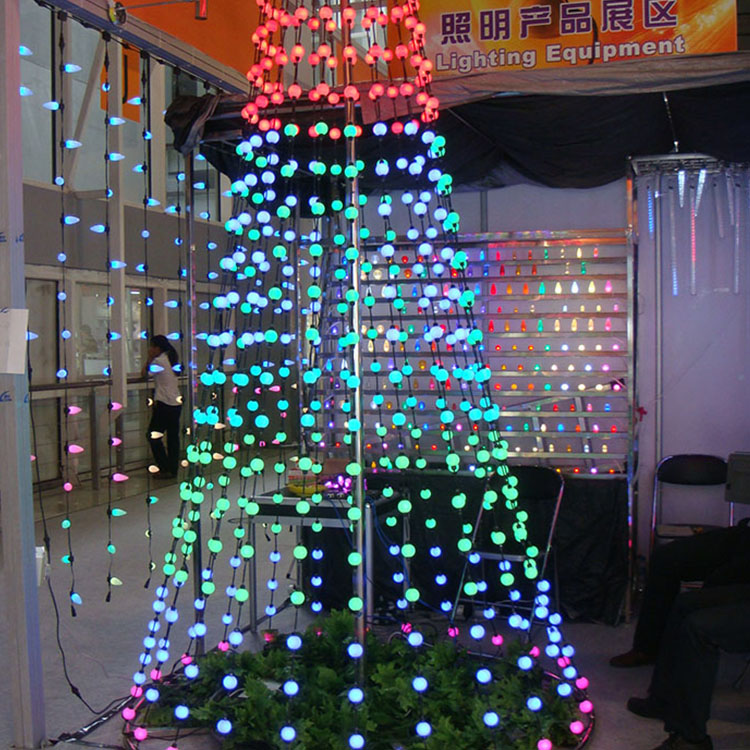
Mapping available technology to specific commercial use cases is essential. Temporary event lighting requires different specifications than permanent architectural fixtures. Event lighting prioritizes durability against frequent handling, rapid deployment, and modular connections. Permanent installations prioritize long-term UV resistance, thermal management, and seamless integration into building materials. Understanding these categories helps wholesalers source the correct technology for their target markets. You must align the physical product with the environmental reality of the installation site.
The choice between analog and addressable control dictates the entire system architecture. Standard analog strings treat the entire run as a single zone. All diodes change to the same color simultaneously. This requires simpler controllers and is highly cost-effective for basic accent lighting. Analog systems use Pulse Width Modulation (PWM) to dim the red, green, and blue channels globally.
Addressable systems offer individual control over every node. RGB pixel string lights utilize integrated circuit (IC) chips to receive specific data commands. This enables complex animations, chasing effects, and video mapping. Evaluating data protocol requirements is critical. The WS2811 protocol is common but lacks a backup data line. If one pixel fails, the rest of the string goes dark. The WS2815 protocol includes dual data lines. If a single node fails, the signal bypasses it, keeping the rest of the installation active. For professional stage and architectural lighting, DMX512 protocols are often preferred for their robust, long-distance signal integrity.
Standard RGB mixes red, green, and blue light to simulate white. This often results in a harsh, bluish-purple tint that looks unnatural. High-end hospitality and interior decor lighting require true white light. Integrating dedicated white diodes (RGBW) solves this problem. You can specify cool white, natural white, or warm white (RGBWW) diodes. The white diodes use a phosphor coating to produce a clean, accurate spectrum. This allows the fixture to provide functional illumination and decorative color from the same footprint. Specifying dedicated white diodes is non-negotiable for commercial spaces that demand accurate color rendering. Restaurants, hotels, and retail spaces rely on high Color Rendering Index (CRI) white light to make food, fabrics, and skin tones look natural.
The physical shape of the lighting element determines its application suitability. You must match the form factor to the mounting surface and viewing angle.
Flexible Strips: Width constraints are critical when matching strips to commercial aluminum extrusions. Ultra-narrow 4mm options fit into tight architectural reveals. However, RGBW and high-density configurations require wider PCBs. These typically range from 12mm to 17.1mm to accommodate the extra diodes and copper traces.
Festoon and C-Series: Municipal and structural perimeter lighting require larger, more visible fixtures. An RGB C7 outdoor light string mimics traditional holiday bulbs but houses modern color-changing technology. These are ideal for rooflines, city squares, and large-scale holiday displays. The faceted covers diffuse the light, making them visible from long distances.
Bullet/Node Strings: Exposed pixel nodes feature individual LEDs encased in resin or silicone. They are wired together with flexible spacing. These are perfect for custom matrix displays, channel letter signage, and fantasy decor lighting. The flexible wire between nodes allows installers to push them through pre-drilled holes in custom props.
Technology Type | Control Granularity | Primary Commercial Use Case | Data Protocol Dependency |
|---|---|---|---|
Standard Analog RGB | Entire string changes together | Basic architectural coves, backlighting | None (PWM voltage control) |
Addressable Pixel (WS2811) | Individual node control | Entry-level animations, signage | Single data line (SPI) |
Addressable Pixel (WS2815) | Individual node control | High-reliability matrix displays | Dual data line (SPI) |
RGBW / RGBWW | Depends on IC integration | High-end hospitality, functional decor | DMX or SPI (if addressable) |
Wholesalers must provide exact specifications when requesting custom manufacturing runs. Vague requests lead to inconsistent product quality. You must define the physical, electrical, and environmental parameters clearly. This ensures the final product meets the rigorous demands of commercial deployment. A complete specification sheet should include the exact length, wire gauge, LED pitch, IP rating, connector type, and operating voltage.
Matching copper thickness to the desired length is a primary engineering challenge. A custom length RGB light string requires specific American Wire Gauge (AWG) ratings based on total power draw. Thin wire, such as 22 AWG, causes high resistance over long distances. This leads to overheating and severe voltage drop. The wire itself can become a fire hazard if forced to carry more current than it is rated for.
For long commercial runs, specifying 18 AWG or 16 AWG pure copper is essential. Thicker copper improves thermal management by dissipating heat more effectively. Low heat emission is critical when installing lights in enclosed architectural spaces. Proper wire gauge selection eliminates color shifting at the end of the run. It ensures uniform brightness from the first diode to the last. When ordering custom lengths, always calculate the total amperage draw and verify the factory is using a wire gauge rated for at least 125% of that load.
The distance between individual LED nodes is called the pitch. You must specify the pitch based on the intended viewing distance. Close-up applications, like under-cabinet lighting, require high density. A density of 120 LEDs per meter eliminates spotting and creates a seamless line of light. If the pitch is too wide in a shallow extrusion, the individual diodes will reflect as distinct dots on the counter surface.
Large-scale building facades are viewed from hundreds of feet away. These applications can utilize a much wider pitch. Spacing nodes 4 to 12 inches apart is common for structural outlines. Wider spacing reduces the total number of LEDs per foot. This significantly lowers the overall cost, weight, and power consumption. Balancing visual density against project budget is a key value-add for distributors. You can engineer a custom string that looks perfectly solid from 200 feet away while using half the power of a standard retail strip.
Outdoor reliability depends entirely on the physical casing of the lighting elements. You must specify the correct Ingress Protection (IP) rating for the environment. Indoor ratings like IP20 offer no moisture protection. For commercial applications, you must choose between higher tiers of protection.
IP65: Features a thin silicone coating over the diodes. Suitable for damp indoor locations or temporary outdoor covered use. It does not withstand direct rain or pooling water.
IP67: Encapsulates the strip inside a hollow silicone tube. Excellent for direct rain exposure and heavy splashing. It is not designed for submersion. The hollow tube allows for some heat dissipation but can trap condensation if not sealed perfectly at the ends.
IP68: Fills the silicone tube or node casing completely with epoxy or polyurethane resin. This provides total waterproofing for submerged applications or extreme weather environments. The solid resin prevents any condensation buildup.
Beyond water resistance, UV exposure degrades plastics rapidly. Permanent outdoor installations require UV-resistant wire jacketing. Standard PVC jackets crack and become brittle under prolonged sunlight. Specifying rubber or rubber-neoprene blends prevents this degradation. It ensures the wiring remains flexible and watertight for years. Polyurethane coatings are vastly superior to standard epoxy, as epoxy tends to yellow and crack after a single summer of direct sun exposure.
Wholesalers constantly balance procurement costs against product reliability. The hidden costs of cheap manufacturing destroy project profitability. Low-cost suppliers frequently use Copper-Clad Aluminum (CCA) wiring instead of pure copper. CCA has higher electrical resistance, leading to worse voltage drop and increased heat. CCA is also brittle. It breaks easily when installers bend the wire around sharp architectural corners.
Cheap manufacturing utilizes low-bin LED chips. These chips suffer from poor color consistency. This inconsistency is measured by MacAdam ellipses. High-quality chips fall within a 3-step MacAdam ellipse, ensuring uniform color across batches. Low-quality chips show visible variations, where one RGB Light might look slightly greener than the one next to it. Poor quality chips also have terrible energy efficiency, drawing more power to produce less light. Investing in pure copper and high-bin LEDs prevents costly site callbacks and warranty claims.
Custom offshore manufacturing typically requires 30 to 90 days for production and freight. This lead time is a significant trade-off. Wholesalers must balance the desire for exact specification matching against immediate project deadlines. Air freight can reduce transit times but destroys profit margins on heavy, copper-dense lighting orders.
One strategy is to stock semi-custom, modular systems locally. You can hold inventory of standardized 1-meter and 5-meter segments with high-quality waterproof connectors. This allows you to build near-custom lengths quickly for rush jobs. However, for massive deployments, waiting the 90 days for a single, continuous factory-sealed run is always the superior engineering choice. It eliminates the mid-run connectors entirely, removing potential failure points.
Selecting the correct operating voltage involves distinct technical trade-offs regarding run length and control granularity.
Voltage | Control Granularity | Max Continuous Run (Typical) | Best Application |
|---|---|---|---|
5V | 1 LED per pixel (Highest) | 10 - 15 feet | Dense matrix panels, close-up props |
12V | 3 LEDs per pixel (Medium) | 25 - 30 feet | Signage, mid-range architectural lines |
24V | 6 LEDs per pixel (Lower) | 50 - 60 feet | Large building perimeters, long coves |
A 5V system offers the highest level of control granularity. Every single LED can be addressed individually. However, 5V systems suffer from extreme voltage drop. They require power injection every few feet, making them impractical for long architectural runs. A 24V system is the standard for long-distance commercial lighting. It carries current more efficiently, allowing for massive runs without mid-point power injection. Addressable 24V strips usually control LEDs in groups of six. This is ideal for large building perimeters where micro-granularity is unnecessary.
Custom orders fail when quality control protocols are ignored. Wholesalers must actively audit their manufacturing partners. Do not assume factory specifications match reality without verification. Implementation risks compound rapidly across large-scale commercial deployments. A single bad batch of silicone sealant can ruin thousands of feet of lighting during the first rainstorm. Request detailed testing reports from the factory, including integrating sphere data for lumen output and thermal imaging for heat dissipation.
Commercial building codes require strict adherence to electrical safety standards. Installing uncertified lighting exposes the distributor and the installer to massive liability. You must request and verify valid UL, ETL, CE, and RoHS documentation. Fire marshals and electrical inspectors will halt projects if the lighting fixtures lack proper safety listings.
Do not accept generic certificates. Ensure the certification specifically covers the custom length and configuration you are ordering. A UL listing for a 5-meter strip does not automatically apply to a custom 20-meter run. Verifying these documents upfront protects your clients from costly compliance failures and forced tear-downs.
The connection points are the most vulnerable parts of any custom string. Standard barrel jacks are prone to corrosion and accidental disconnection. They are entirely unsuitable for outdoor commercial use. Moisture wicks into the barrel jack, shorting the data line and causing flickering.
Evaluate manufacturers based on their factory-molded connectors. Systems like xConnect, Ray Wu, or Paul Zhang style pigtails feature threaded, O-ring sealed connections. These prevent water ingress at the injection points. You must also mandate factory-sealed end-caps. A poorly sealed end-cap will wick moisture directly into the copper PCB, destroying the entire run from the inside out. The factory should apply dielectric grease and use injection-molded silicone to seal the terminal ends completely.
The custom string must perfectly match the control infrastructure. Ensure the specific IC chip is fully compatible with commercial-grade controllers. Avoid consumer-grade DIY setups. Bare ESP32 boards and open-source software are excellent for hobbyists but fail in enterprise deployments. Commercial installations require dedicated DMX or SPI controllers with robust signal amplification and optical isolation.
Power supply matching is equally critical. Temporary, battery-powered event installations require low-draw, high-efficiency systems. Permanent hardwired runs demand heavy-duty, IP-rated transformers. The power supply must be rated for at least 20% more wattage than the custom string's maximum theoretical draw. This overhead prevents transformer burnout during continuous operation. If a custom string draws 400 watts at full white, specify a 500-watt power supply.
Custom length RGB solutions transition wholesalers from commodity sellers to value-added project partners. By controlling the exact specifications, you eliminate on-site labor waste and guarantee long-term reliability. Success depends entirely on rigorous technical management during the procurement phase.
Request detailed engineering samples of specific lengths before committing to bulk container orders.
Conduct in-house physical testing, including voltage drop measurements, heat dissipation tracking, and 24-hour water submersion trials.
Establish clear Service Level Agreements (SLAs) with your manufacturer regarding acceptable defect rates and warranty replacements.
Standardize your connector types across all custom orders to ensure cross-compatibility for your installation clients.
A: The maximum length depends on the operating voltage and wire gauge. A 5V system typically shows voltage drop after 15 feet. A 12V system can run up to 30 feet. A 24V system with heavy-gauge copper can often reach 50 to 60 feet before requiring mid-point power injection.
A: Standard strings are analog, meaning all LEDs change to the same color simultaneously. Pixel strings contain integrated circuit (IC) chips at each node. This allows a controller to send unique data to every individual LED, enabling complex chasing effects and video mapping.
A: RGBW strips include a dedicated white diode alongside the red, green, and blue diodes. This requires a physically wider copper printed circuit board (PCB) to accommodate the extra components and additional electrical traces. They typically require extrusions that fit 12mm to 15mm widths.
A: Yes. Manufacturers can customize the wire length between each C7 bulb, known as the pitch. Customizing the pitch allows you to match the exact architectural features of a building or optimize the visual density for specific viewing distances.
A: Permanent outdoor installations require at least an IP67 rating, which protects against heavy rain and splashing. For environments prone to standing water or extreme weather, IP68 resin-filled fixtures are highly recommended to prevent any moisture ingress.
A: Manufacturers multiply the maximum power draw per LED by the total number of LEDs in the custom length. They then add a 20% safety buffer. This ensures the power supply is not running at maximum capacity, which prevents overheating and extends transformer lifespan.
A: A 12V system offers slightly better control granularity for addressable pixels but requires more frequent power injection. A 24V system carries current more efficiently over long distances, making it the preferred choice for massive architectural runs that require fewer power supplies.


