
- All
- Product Name
- Product Keyword
- Product Model
- Product Summary
- Product Description
- Multi Field Search
- Product private attributes
Views: 0 Author: Site Editor Publish Time: 2026-09-30 Origin: Site


Manufacturers stamp "50,000 hours" on the box, but field realities tell a different story. When you install permanent exterior fixtures, you need accurate return on investment data. That means separating the laboratory lifespan of an LED chip from the actual failure points of drivers, housings, and wiring exposed to rain, wind, and UV rays. Legacy halogen setups burn out fast, demanding constant bulb swaps. Upgrading to RGB Outdoor Lighting pushes functional life up to 25 times longer, justifying the upfront capital. But you only hit those numbers if you build the system right. We evaluate longevity by looking at component grades, weather resilience, and strict installation protocols to keep the lights on year after year.
Realistic Lifespan Metrics: High-quality RGB outdoor lighting typically maintains optimal brightness for 25,000 to 50,000 hours (roughly 10 to 15 years at 8 hours of daily use) before reaching the L70 degradation threshold.
Consumer vs. Commercial Grade: Standard consumer kits generally max out around 25,000 hours, whereas commercial-grade systems with superior thermal management can push toward 100,000 hours.
The Weakest Link Principle: System failure is rarely caused by the LED diodes; power supplies, controllers, and poor waterproofing are the primary culprits for premature failure.
Ingress Protection is Non-Negotiable: Achieving maximum lifespan requires matching the correct IP rating (e.g., IP65, IP66, IP67) to the specific environmental exposure of the installation site.
Thermal Management Dictates Longevity: Excessive heat accelerates diode degradation; fixtures with integrated aluminum heat sinks significantly outlast enclosed plastic alternatives.
To accurately evaluate lighting longevity, you must understand the L70 standard. Unlike traditional incandescent bulbs that burn out abruptly when a tungsten filament breaks, light-emitting diodes experience gradual lumen depreciation. The L70 metric represents the exact point at which the LED's light output drops to 70% of its original initial brightness. At this stage, the human eye begins to noticeably perceive the dimming effect, and the fixture no longer meets professional illumination standards. A 50,000-hour rating does not mean the fixture goes completely dark at hour 50,001. It means the fixture will no longer provide specification-grade light output.
Translating laboratory testing hours into actual calendar years requires analyzing your specific usage patterns. Establishing accurate baseline expectations allows facility managers and homeowners to plan maintenance schedules effectively. The operational schedule directly dictates the thermal stress applied to the system, which in turn dictates the calendar lifespan of the installation.
Usage Scenario | Daily Operation | Annual Hours | Estimated Years to L70 (at 50,000 hrs) |
|---|---|---|---|
Year-Round Architectural Lighting | 8 Hours | 2,920 Hours | 17.1 Years |
Seasonal / Event Lighting | 5 Hours (4 months/year) | 600 Hours | 83.3 Years (Theoretical) |
Security / Pathway Lighting | 12 Hours | 4,380 Hours | 11.4 Years |
24/7 Continuous Operation | 24 Hours | 8,760 Hours | 5.7 Years |
While the math provides a theoretical baseline, a massive gap exists between diode longevity and system longevity. The LED chip operates in a controlled, temperature-regulated vacuum during laboratory testing. Out in the field, the complete lighting fixture faces extreme temperature fluctuations, driving rain, and ultraviolet radiation. The practical lifespan of an outdoor installation is almost always dictated by the failure of secondary components rather than the degradation of the diode itself.
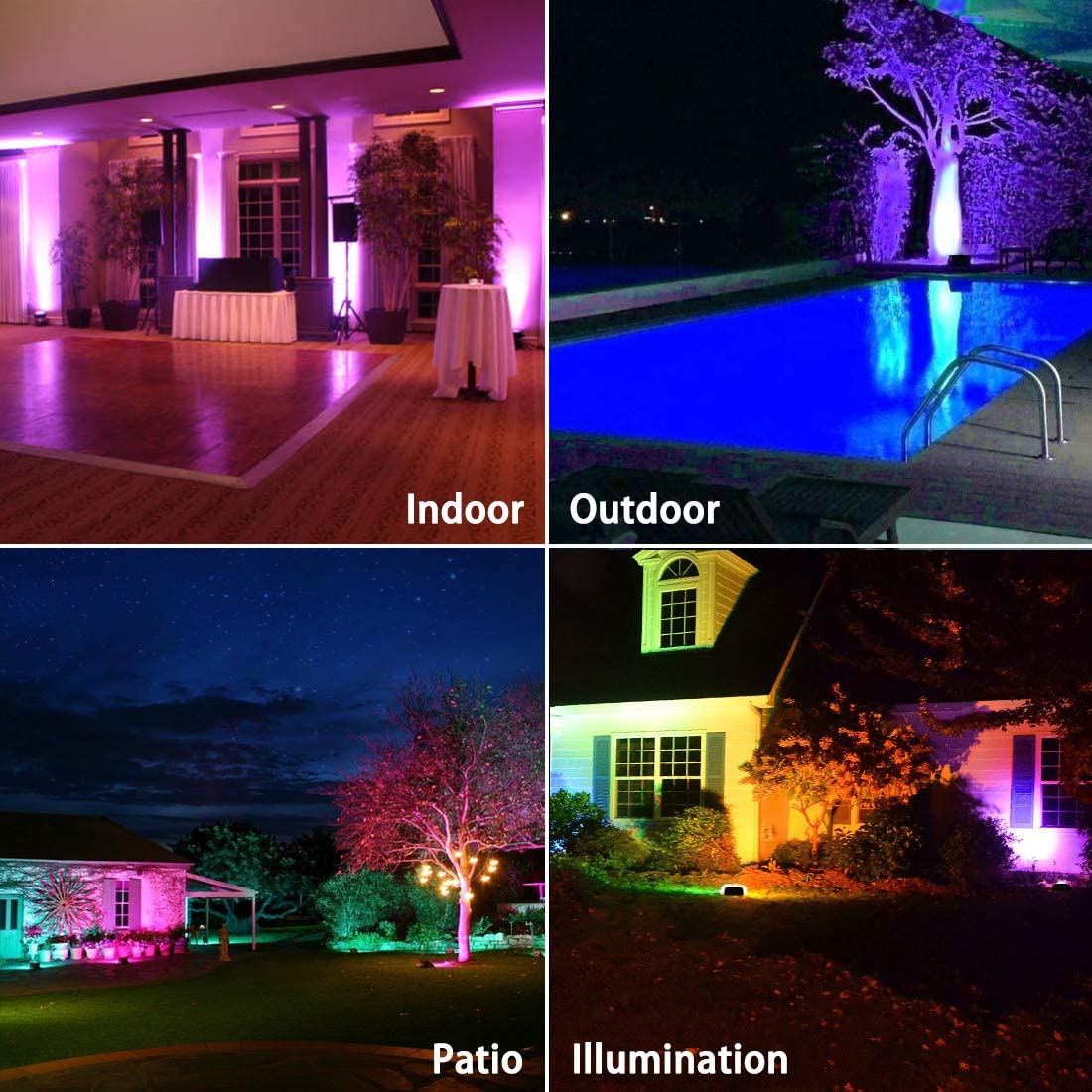
The specific type of diode used in an exterior application heavily influences its durability. The SMD 5050 (Surface Mount Device, measuring 5.0mm by 5.0mm) remains a standard in outdoor lighting due to its larger surface area, which aids in heat dissipation. However, not all colors degrade at the same rate. Red and green diodes rely on pure semiconductor materials and typically maintain their brightness longer. Blue and white diodes utilize a phosphor coating over a blue emitter. This phosphor layer degrades faster under thermal stress. You will often see white light shift toward a bluish or yellowish tint over a five-year period. High-quality fixtures utilize advanced phosphor formulations to minimize this color shifting, keeping the light output consistent over a decade.
The power supply acts as the heart of any lighting system, converting high-voltage alternating current into low-voltage direct current. It is also the most common point of premature system failure. Inside these drivers, electrolytic capacitors are highly sensitive to heat. As the driver operates, internal temperatures rise, causing the liquid electrolyte within the capacitors to slowly evaporate or dry out. Once the capacitor fails, the entire lighting system goes dark, regardless of the health of the LED diodes. For exterior longevity, utilizing fully potted, IP-rated power supplies is an absolute necessity. Potting involves filling the driver enclosure with a solid compound, typically epoxy or polyurethane, that protects electronic components from shock, vibration, and moisture ingress while simultaneously improving thermal conductivity.
The physical structure supporting the diodes is equally vulnerable to environmental degradation. Printed Circuit Boards (PCBs) act as both the electrical pathway and the primary heat sink for the diodes. The thickness of the copper on the PCB is a critical durability factor. A 2-ounce or 3-ounce copper PCB provides superior heat dissipation and handles electrical current with less resistance than a standard 1-ounce board. This prevents localized hotspots that burn out diodes. Furthermore, the protective coatings over these boards face constant UV exposure. Cheap epoxy coatings yellow and crack under direct sunlight. This yellowing blocks light output and traps heat against the diode. Premium fixtures utilize UV-resistant silicone extrusion, which remains optically clear and flexible over decades of sun exposure.
Linear lighting solutions are heavily utilized for permanent architectural lighting and roofline accents. When evaluating waterproof RGB outdoor lights, the manufacturing process of the protective jacket is paramount. Standard heat-shrink tubing or hollow silicone tubes often fail because air trapped inside expands and contracts with temperature changes, eventually compromising the end seals. Solid silicone-extruded strips, where the PCB is completely encased without air gaps, offer vastly superior longevity. Mounting these strips directly to wood or fascia board traps heat. You must utilize aluminum mounting channels to act as a secondary heat sink. The aluminum draws thermal energy away from the back of the strip while providing physical protection against wind-blown debris and ice accumulation.
Landscape illumination, wall washing, and security applications demand high-lumen output from concentrated sources. RGB LED flood lights generate significant localized heat. The longevity of these fixtures relies entirely on their physical construction. Die-cast aluminum housings are mandatory. Plastic housings simply cannot dissipate the heat generated by 10W, 30W, or 50W LED arrays. Tempered glass lenses are required to resist scratching from blowing sand and prevent shattering during rapid temperature changes, such as cold rain hitting a hot lens. A major risk factor for flood lights is internal condensation. High-quality units incorporate built-in heat sinks with deep fins to maximize surface area for cooling, alongside pressure-equalizing breather valves. These Gore-Tex patches allow air to escape without letting moisture in, preventing thermal throttling and internal corrosion.
For festoon lighting, patios, and commercial outdoor dining spaces, suspended lighting faces unique mechanical stresses. Wind constantly flexes the wires, and the fixtures are fully exposed to the elements from all angles. IP66 RGB light strings provide a specific advantage in these environments. The IP66 rating certifies protection against high-pressure water jets, making them highly resilient against severe storms and commercial pressure-washing protocols. Longevity in this category requires heavy-duty AWG (American Wire Gauge) wiring, typically 18 AWG or thicker, to handle the physical tension of suspension and prevent voltage drop across long spans. Shatterproof acrylic or polycarbonate bulbs must be used instead of glass to withstand physical impacts from wind-blown branches or accidental strikes during maintenance.
An inverse relationship exists between the operating junction temperature of an LED and its functional lifespan. The junction temperature is the highest temperature point inside the semiconductor diode. For every 10°C increase above the manufacturer's recommended operating temperature, the lifespan of the LED is effectively cut in half. High-lumen output in compact, unventilated housings represents a severe engineering trade-off. While the fixture may appear bright initially, the inability to shed thermal energy causes rapid phosphor degradation and premature diode failure. Ensuring proper airflow around fixtures and avoiding installation in enclosed, unventilated soffits keeps the junction temperature low and maintains the intended lifespan.
Water destroys electrical circuits. Understanding the nuances of Ingress Protection (IP) ratings prevents catastrophic failures. Water resistance (IP65) protects against low-pressure jets and standard rainfall. It does not protect against submersion or pooling water. Waterproofing (IP67 or IP68) is required for ground-level installations where heavy rain might submerge the fixture temporarily. A hidden danger is the "breathing" effect. When a fixture operates, the air inside heats up and expands, pushing outward through micro-gaps in the seals. When the light turns off and cools rapidly, it creates a vacuum, drawing humid outside air into the housing. Over time, this humidity condenses on the internal PCB, leading to galvanic corrosion and short circuits. Breather valves and solid potting are the only reliable defenses against this phenomenon.
Continuous solar exposure relentlessly degrades polymers. UV radiation breaks the chemical bonds in plastic housings, polycarbonate lenses, and PVC wire insulation. Once the wire insulation becomes brittle, it cracks, exposing bare copper to the elements and causing immediate ground faults. In extreme cold climates, this brittleness is exacerbated. Sub-zero temperatures cause standard PVC jackets to stiffen and shatter upon impact or movement. Installations in harsh climates require fixtures utilizing UV-stabilized silicone or specialized rubber compounds that maintain flexibility and structural integrity regardless of temperature extremes or intense sun exposure.
A perfectly manufactured lighting fixture fails rapidly if supplied with unstable power. Overloading power supplies is a rampant issue in permanent installations. When a driver operates at 100% of its rated capacity, it generates excessive heat and stresses its internal capacitors. Installers must implement the 80% rule: never load a power supply beyond 80% of its maximum wattage rating. Running excessively long continuous lines causes voltage drop. As voltage decreases along the line, the electrical current must increase to deliver the same power, forcing the driver to overwork and generating excess heat in the wiring. Implementing power injection by running parallel power lines to inject fresh voltage at regular intervals stabilizes the system and protects the hardware.
The integrity of a waterproof lighting system is only as strong as its weakest connection. Piercing waterproof jackets with staples, executing improper wire splices, or failing to seal cut end-caps leads to immediate water ingress. Capillary action draws water through the microscopic spaces between copper wire strands, pulling moisture directly from a bad splice straight into the LED housing. Installation protocols must standardize the use of marine-grade, adhesive-lined heat shrink tubing. Dielectric grease should be applied to all mechanical connections to displace moisture. Installers must create drip loops. Form a deliberate downward U-shape in the wiring just before it enters a housing or junction box, ensuring that gravity pulls water away from the connection point.
Modern RGB systems rely on smart controllers to manage color mixing, dimming, and scheduling. These microprocessors are highly sensitive to moisture and heat. A common implementation risk is placing non-waterproof Wi-Fi or Bluetooth controllers in exposed outdoor areas, assuming the eaves will protect them. Wind-driven rain and ambient humidity quickly corrode the controller's PCB. All control modules, data receivers, and power distribution blocks must be housed within NEMA-rated (National Electrical Manufacturers Association) weatherproof enclosures. These enclosures provide a sealed environment, protecting the brains of the lighting system from environmental hazards.
Lens and Housing Cleaning: Dirt, pollen, bird droppings, and hard water buildup from sprinkler systems coat the exterior lenses of lighting fixtures. This layer of grime reduces lumen output and acts as an insulating blanket, trapping heat inside the fixture. Implement a bi-annual cleaning schedule using a non-abrasive microfiber cloth and a mild solvent to prevent thermal buildup and restore optical clarity.
Seal and Enclosure Inspections: Environmental stress causes materials to expand and contract thousands of times over a few years. Conduct annual audits of NEMA enclosures, silicone end-caps, and weather-stripping to catch micro-cracks before moisture ingress occurs. Reapply outdoor-grade silicone sealant to suspect joints to save an entire lighting run from water damage.
Vegetation Management: Landscape foliage grows rapidly and quickly engulfs ground-level or wall-mounted fixtures. Plants wrapping around fixtures restrict necessary airflow, creating micro-climates of high humidity and heat. Branches rubbing against wiring during high winds eventually wear through the insulation. Keep vegetation trimmed at least 12 inches away from all lighting hardware to ensure proper ventilation and prevent mechanical damage.
Connection Audits: Check all exposed wire splices and junction boxes after severe weather events. Look for signs of oxidation or loose wire nuts. Tightening connections and reapplying dielectric grease prevents resistance buildup that leads to voltage drop and overheating.
To maximize the lifespan of your outdoor lighting installation and protect your investment, execute the following steps immediately:
Audit your specific installation environment to identify temperature extremes, direct UV exposure zones, and areas prone to pooling water.
Calculate your anticipated daily usage hours to establish a realistic baseline for your maintenance schedule and component replacement timeline.
Map out your power distribution strategy to ensure you have adequate space for NEMA enclosures and can adhere strictly to the 80% load rule for all drivers.
Select the appropriate form factor based on the physical mounting constraints of your property, prioritizing aluminum housings and IP66 or higher ratings for exposed areas.
A: Yes, if properly engineered and installed. A diode rated for 50,000 hours running 8 hours a night mathematically lasts over 17 years. Real-world weather conditions, thermal stress, and component wear typically reduce the functional system life to a highly realistic 10 to 15 years.
A: The LED diodes rarely fail first. Premature failure is almost always caused by power supply burnout due to overloading, water ingress from poorly sealed connections, or UV degradation of the housing that traps heat and damages the internal circuitry.
A: While possible, continuous operation drastically reduces the calendar lifespan of the system. Running lights 24/7 halves the lifespan in years compared to 12-hour usage and increases constant thermal stress. Utilizing timers or smart photocells is highly recommended.
A: IP65 fixtures handle low-pressure water jets and standard rain. IP66 fixtures are tested to withstand high-pressure water jets from any direction. This makes IP66 significantly better for areas experiencing severe driving rainstorms or environments requiring commercial pressure washing.
A: Yes, color shifting occurs. While red and green diodes are highly stable, blue and white diodes rely on phosphor coatings. Prolonged thermal stress causes this phosphor to degrade over thousands of hours, leading to dimming or a shift in color temperature.
A: Never load the power supply beyond 80% of its maximum wattage capacity. Mount the driver inside a waterproof NEMA enclosure, keep it out of direct afternoon sunlight to minimize ambient heat, and ensure it is elevated above any potential pooling water.
A: Absolutely. Periodically cleaning lenses removes dirt that traps heat and reduces light output. Checking and repairing waterproof seals or silicone end-caps prevents moisture ingress, easily adding years to the functional lifespan of the installation.


