
- All
- Product Name
- Product Keyword
- Product Model
- Product Summary
- Product Description
- Multi Field Search
- Product private attributes
Views: 0 Author: Site Editor Publish Time: 2026-08-10 Origin: Site


Theme park infrastructure carries a dual mandate. It must deliver immersive, emotional guest experiences while maintaining rigorous safety and operational efficiency standards. Specifying fixtures for these environments requires technical precision. The equipment must withstand extreme weather, operate continuously, and integrate with complex control systems. It must also minimize operational overhead without compromising the aesthetic vision. This guide provides a technical framework for facility managers, lighting designers, and procurement teams. It will help you evaluate, shortlist, and implement commercial-grade outdoor lighting solutions effectively. We focus on practical field applications, from selecting the right ingress protection ratings to mapping out DMX control networks for synchronized attraction illumination.
Zoned Illumination Strategy: Effective design requires distinct technical specifications for different zones—from high-visibility parking floodlights to immersive, low-glare pathway fixtures.
Durability is Non-Negotiable: Commercial amusement park lighting demands minimum IP66/IP67 ratings, robust IK impact resistance, and corrosion-proof housings to survive continuous outdoor exposure.
Dynamic vs. Static ROI: While RGB outdoor lights and programmable DMX systems offer superior event flexibility, they require higher upfront investment and specialized maintenance compared to static LED configurations.
Compliance and Safety: Proper illumination must meet local light pollution ordinances (e.g., Dark Sky compliance) while eliminating blind spots and ensuring ADA-compliant wayfinding.
Municipal parks and themed amusement venues operate on entirely different scales. Public parks generally close at dusk and experience moderate foot traffic. Their lighting focuses on passive safety and basic illumination. In contrast, amusement park lighting must support high-density crowds long after sunset. It actively drives brand storytelling, creates dynamic atmospheres, and deepens guest immersion. Structurally, commercial attractions require much higher IK impact ratings. They need extreme weatherproofing and seamless integration with complex master-control systems. Standard landscaping fixtures simply cannot survive these rigorous duty cycles. When you install a fixture near a roller coaster, it faces constant vibration. Municipal park lights never experience this level of kinetic stress. You must specify heavy-duty mounting brackets and vibration-resistant lock-nuts to prevent mechanical failure.
The operational hours also dictate a different approach to thermal management. A standard park light might run for four hours a night. Theme park fixtures often run for 12 to 16 hours continuously. This extended duty cycle generates significant heat. If the fixture lacks an advanced passive heat sink, the LED chips will suffer from thermal throttling. This leads to rapid lumen depreciation. You will find yourself replacing fixtures far ahead of their projected L70 lifespan. Therefore, you must evaluate the thermal dissipation properties of the housing material. Extruded aluminum offers excellent heat transfer, but it requires a marine-grade powder coating to resist corrosion in coastal environments.
Guest safety forms the baseline of any illumination strategy. You must eliminate shadows on uneven surfaces and clearly highlight elevation changes. Security cameras also require clear visibility to minimize blind spots across the property. However, you must balance this high-lumen output against the psychological impact of light design. You can engineer emotion through light. Deploying soft, golden glows between 2200K and 2700K along pathways signals security, relaxation, and comfort. The ultimate trade-off matrix involves providing enough light for physical safety without washing out carefully crafted thematic elements.
Consider the application of pathway bollards. If they are too bright, they create glare that ruins the night vision of your guests. This makes the surrounding thematic elements appear darker than they actually are. To solve this, you should specify fixtures with a low Unified Glare Rating (UGR). Use internal louvers or frosted lenses to diffuse the light source. Direct the beam downward to illuminate the walking surface without spilling light into the guests' eyes. This approach maintains safety compliance while preserving the immersive atmosphere of the themed environment.
Accessibility is a strict legal requirement. You must maintain ADA-compliant illumination levels along all primary and secondary pathways. Directional lighting plays a critical role in emergency egress. It aids crowd management and helps guests navigate public spaces during unexpected power interruptions. Furthermore, you must navigate common regulatory hurdles. Local light trespass laws and dark-sky regulations dictate how you position and shield fixtures. You must also consider environmental impacts on surrounding wildlife and nocturnal ecosystems when planning your layouts.
Wayfinding relies heavily on visual hierarchy. You can guide crowd flow naturally by adjusting illumination levels. Make main thoroughfares slightly brighter than secondary paths. Use distinct color temperatures to identify different zones. For example, use 3000K for retail areas and 4000K for transit hubs. This subtle visual cue helps guests orient themselves without relying entirely on physical signage. During an emergency, your lighting control system should automatically override thematic settings. It must flood the egress routes with high-visibility white light to ensure safe and rapid evacuation.
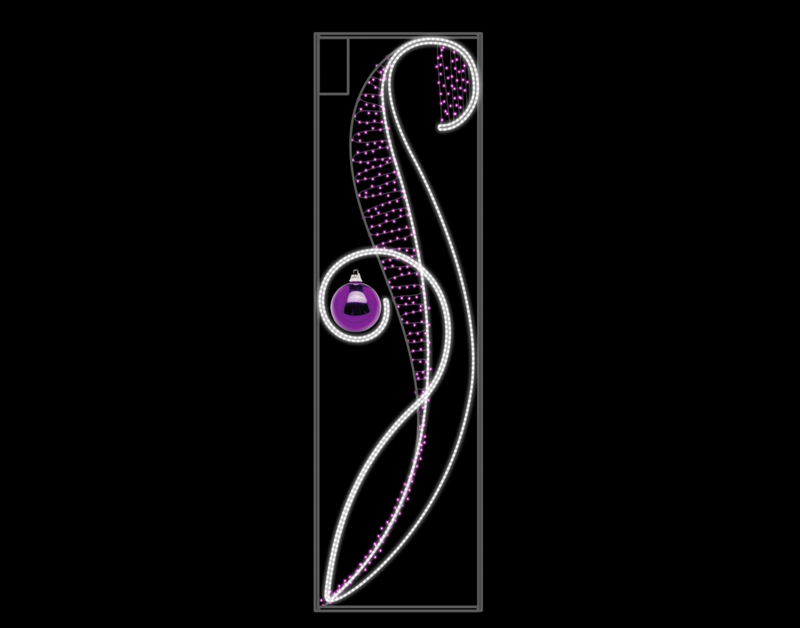
First impressions matter immensely. Specify high-impact outdoor decorative lighting to create an immediate emotional impact. This establishes your brand identity the moment guests arrive. Integrate IP67-rated architectural wash lighting with high-output fixtures to create dynamic welcome portals. These color-changing sequences build excitement. Always evaluate the requirement for high color rendering index fixtures. Using CRI >90 ensures accurate color representation of park branding, merchandise displays, and guest photography.
When designing entrance plazas, consider the mounting locations carefully. Ground-recessed uplights look fantastic against architectural columns, but they are highly susceptible to water ingress and foot traffic damage. You must specify drive-over rated fixtures with thick tempered glass lenses. Ensure the installation includes proper drainage beneath the fixture housing. A layer of crushed gravel below the mounting sleeve prevents water from pooling around the electrical connections. This simple installation step drastically reduces the failure rate of in-ground fixtures.
Rides require highly specialized approaches. Apply heavy-duty motif lights and custom-fabricated LED arrays to reinforce specific ride narratives. Dynamic, synchronized fixtures react in real-time to ride vehicle movements. This requires fast-response DMX protocols, strobe capabilities, and color-chasing effects. Mounting fixtures in high-vibration environments presents a major challenge. Roller coaster tracks generate intense kinetic energy. You must use specialized vibration-resistant brackets and lock-nuts to prevent fixture failure and ensure guest safety.
Wiring these dynamic fixtures requires meticulous planning. You cannot use standard solid-core copper wire on a moving attraction. The constant flexing will cause the copper to work-harden and snap. Instead, specify high-strand-count, extra-flexible cables designed for continuous motion applications. Route these cables through heavy-duty, UV-resistant flexible conduits. Secure the conduits at regular intervals using rubber-lined P-clamps to prevent chafing against the ride structure. This level of attention to detail prevents electrical shorts and ensures reliable operation during peak season.
Transit areas demand uniform, shadow-free coverage. Specify high-mast LED floodlights and street luminaires for these extensive zones. Asymmetric optics are crucial here. Use Type III or Type IV distribution patterns to push light exactly where needed. This prevents spillover into neighboring residential zones. Integrate motion sensors, daylight harvesting, and bi-level dimming protocols. These technologies generate significant energy savings during off-peak and non-operating hours.
To achieve optimal uniformity in a parking lot, you must perform detailed photometric calculations. Do not guess the pole spacing. Use software like AGi32 to model the layout. Aim for a max-to-min uniformity ratio of 4:1 or better. This eliminates dark spots where security incidents could occur. When selecting the poles, factor in the local wind load requirements. High-mast poles carrying multiple heavy LED fixtures act like sails in high winds. You must specify poles with the correct wall thickness and base plate dimensions to withstand hurricane-force gusts if your park is located in a coastal region.
Hospitality zones require a shift in strategy. Move toward warmer color temperatures, typically 2700K to 3000K. This creates inviting, comfortable atmospheres in quick-service dining and retail areas. Use decorative event lighting techniques to delineate seating boundaries. Heavy-duty commercial festoons, pathway bollards, and low-level landscape fixtures work perfectly here. Glare control is paramount. Maintain a low Unified Glare Rating (UGR <19) to ensure guest visual comfort during extended dwell times.
When installing festoon strings over dining patios, never rely on the electrical wire to support the weight of the fixtures. Over time, the tension will stretch the wire and break the internal connections. Always install a dedicated stainless steel aircraft cable as a messenger wire. Secure the festoon string to the messenger wire using UV-resistant zip ties or specialized suspension clips. This transfers the mechanical load away from the electrical conductors, ensuring the installation remains safe and functional for years.
Understanding IP ratings is critical for theme park environments. Fixtures face daily high-pressure chemical washdowns, torrential rain, and splash zones. You must select the appropriate rating for each specific application. A common mistake is assuming IP65 is sufficient for all outdoor areas. It is not. IP65 only protects against low-pressure jets. Park maintenance crews often use high-pressure washers to clean pathways. If they hit an IP65 fixture, water will bypass the seals and destroy the driver.
IP Rating | Protection Level | Ideal Theme Park Application |
|---|---|---|
IP65 | Protected against low-pressure water jets. | Covered walkways, sheltered retail facades, and high-mounted floodlights. |
IP66 | Protected against high-pressure water jets. | Exposed pathways, open plazas, and areas subject to heavy rain. |
IP67/IP68 | Protected against temporary or continuous immersion. | Water ride perimeters, splash zones, and underwater fountain features. |
Evaluate housing materials carefully. Extruded copper-free aluminum, marine-grade 316 stainless steel, and engineering-grade composite plastics each offer different benefits. Factor in UV degradation and coastal salt-spray corrosion. Thermal management also dictates fixture longevity. Advanced passive heat sinks prevent thermal throttling and LED lumen degradation in high-ambient-temperature climates. When dealing with underground connections, mandate IP68 waterproof gel-filled junction boxes. Use continuous-run outdoor-rated cabling and resin-potted cable entry points to eliminate moisture intrusion via capillary action.
Operational flexibility often dictates fixture choice. Compare the programming complexity of RGB and RGBW fixtures against the reliability of static single-color LEDs. Static LEDs offer high efficacy and lower initial investment. However, programmable RGB outdoor lights provide measurable value for seasonal overlays, nighttime parades, and holiday events. Implementing RGBW systems requires strict technical prerequisites. You must install dedicated data cabling, such as Shielded Cat6 or RS-485. Decoders and main show control integration are also mandatory.
When designing a DMX network for RGB fixtures, pay close attention to signal degradation. DMX signals can only travel approximately 300 meters before they require amplification. You must strategically place DMX opto-splitters and repeaters throughout the park to maintain signal integrity. Furthermore, always terminate the end of a DMX run with a 120-ohm resistor. Failing to terminate the line causes signal reflections, which result in flickering lights and erratic color changes. These technical details separate a professional installation from a constant maintenance headache.
Match lumen packages to specific mounting heights and target lux levels. Architectural applications require precise photometric planning. Secondary optics shape the beam and cut off glare. Lenses, internal louvers, external snoots, and barn doors prevent light pollution. Utilize photometric planning tools like DIALux or AGi32. 3D virtual rendering engines allow you to model, visualize, and validate illumination layouts long before procurement begins.
Consider the beam angle when illuminating tall vertical structures, such as a themed castle or a drop tower. A wide beam angle will waste light by spilling it into the night sky. Instead, specify narrow spot optics (e.g., 5 to 10 degrees) to punch the light exactly where it needs to go. Use external snoots to physically block the light from hitting unintended targets. This precise optical control maximizes the visual impact of the structure while minimizing energy waste and light pollution.
Migrating legacy High-Intensity Discharge (HID) and metal halide systems to high-efficacy LED platforms yields massive energy savings. Target a minimum of 120 lumens per watt. Variable load management and power factor correction further optimize energy consumption. Commercial utility rebates often offset initial capital expenditures. Amusement parks typically operate 10 to 16 hours daily, 365 days a year. This continuous usage model accelerates the payback period for high-efficiency retrofits.
When executing a retrofit, do not simply replace a 400W metal halide with a 400W LED equivalent. LEDs are highly directional, whereas HID lamps emit light in 360 degrees. A 150W LED fixture with the correct optics can often match or exceed the useful ground-level illumination of a 400W HID fixture. Conduct a one-for-one mock-up test on-site before ordering hundreds of replacement heads. This ensures you achieve the desired light levels without over-specifying the wattage.
Industry-standard control protocols dictate system flexibility. Use DMX512-A and RDM (Remote Device Management) for dynamic entertainment lighting. Deploy DALI or 0-10V protocols for static architectural and pathway dimming. Cloud-based, centralized management dashboards offer distinct advantages. They enable precise scheduling, remote diagnostic monitoring, and automated fault reporting. Address the cybersecurity implications of networked outdoor systems immediately. Deploy isolated VLANs specifically for show control to prevent unauthorized access.
RDM is a game-changer for maintenance teams. Without RDM, changing the DMX address of a fixture mounted 50 feet in the air requires a boom lift and two technicians. With RDM, a technician can re-address the fixture remotely from the ground using a laptop or a handheld controller. This drastically reduces maintenance labor costs and minimizes operational downtime. Always specify RDM-compliant fixtures and splitters when building a new entertainment lighting network.
Replacing fixtures in hard-to-reach locations incurs high labor and equipment rental costs. Roller coaster peaks, tall structural towers, and themed rockwork present significant maintenance challenges. Evaluate the operational benefits of modular fixture designs. Tool-less entry, quick-disconnect wiring harnesses, and field-replaceable LED engines streamline maintenance. Define realistic engineering expectations for L70, L80, and L90 lumen maintenance lifespans. Continuous, harsh outdoor operating conditions accelerate degradation, so plan replacement cycles accordingly.
Standardize fixture types across different park zones to reduce spare parts inventory.
Implement a proactive cleaning schedule to remove dirt and debris from heat sinks.
Test all emergency egress lighting systems monthly to ensure battery backup functionality.
Inspect mounting hardware annually for signs of corrosion or mechanical fatigue.
Premature fixture failure frequently results from guest tampering, vandalism, or accidental impact from park maintenance vehicles. Mitigate this risk by specifying IK08 to IK10 impact-rated polycarbonate or tempered glass lenses. Use tamper-proof security fasteners for all ground-level and accessible fixtures. Water ingress presents another major risk. Capillary action and condensation can destroy underground wiring conduits. Mandate IP68 waterproof gel-filled junction boxes. Use continuous-run outdoor-rated cabling and resin-potted cable entry points to eliminate moisture intrusion.
When installing fixtures in heavy foliage or landscaping, account for plant growth. A perfectly aimed uplight will become useless if a bush grows over it six months later. Mount landscape fixtures on adjustable risers. This allows the maintenance team to elevate the light source as the surrounding vegetation matures. Additionally, use brass or composite housings in landscaped areas. Aluminum housings, even when powder-coated, will eventually corrode when exposed to the acidic fertilizers used in commercial landscaping.
Complete overhauls risk extended operational disruption, park closures, and budget overruns. Adopt a phased implementation strategy instead. Prioritize high-liability zones first. Upgrade parking lots, main transit pathways, and emergency egress routes before tackling purely decorative aesthetic zones. Incompatibility between newly installed LED fixtures and legacy analog control systems is a frequent hurdle. Conduct a comprehensive pre-design infrastructure audit. Pilot-test a small, isolated zone using protocol converters before committing to a park-wide rollout.
During a phased rollout, maintain clear documentation of the existing electrical circuits. Old theme parks often have undocumented wiring modifications made over decades. Before installing new LED drivers, verify the actual line voltage at the fixture location. Voltage drop across long wire runs can cause LED drivers to malfunction or fail prematurely. If you measure significant voltage drop, you must pull new, thicker gauge wire or install step-up transformers to ensure the new fixtures receive clean, stable power.
Successful Theme Park Lighting requires a rigorous balance of aesthetic ambition, uncompromising durability, and long-term operational efficiency. Procurement teams must prioritize manufacturers who provide comprehensive photometric support and proven IP/IK certifications. Interactive visualization tools and transparent warranty terms are far more valuable than the lowest initial unit cost. To move forward effectively:
Request a site-specific lighting audit to identify high-liability zones and energy waste.
Download a photometric planning checklist to standardize your procurement requirements.
Consult with a specialized lighting engineer to map out DMX control infrastructure.
Pilot-test RGB fixtures in a single plaza before executing a park-wide rollout.
A: General outdoor areas require a minimum of IP66 to withstand heavy rain and high-pressure washdowns. Areas exposed to water rides, splash zones, or temporary submersion demand IP67 or IP68 ratings to prevent water ingress and electrical failure.
A: They integrate via DMX512-A controllers and decoders. Remote Device Management (RDM) allows two-way communication for diagnostics. This integration requires compatible wiring infrastructure, such as shielded data cables, and often runs on an isolated VLAN for security.
A: Amusement park fixtures operate on much larger scales and longer duty cycles. They require higher IK impact ratings to survive dense crowds and maintenance vehicles. They also integrate seamlessly with complex life-safety systems and show-control networks.
A: Lighting establishes a brightness hierarchy. Brighter, cooler lights naturally draw guests toward main thoroughfares and exits. Warmer, dimmer lights encourage dwelling in rest areas. Color coding can also visually separate different themed lands, aiding intuitive navigation.
A: Yes. Modern LED motifs are highly modular. They utilize programmable pixel mapping, allowing operators to change colors, patterns, and animations instantly. This flexibility makes them ideal for transitioning between Halloween, winter holidays, and summer festivals.


