
- All
- Product Name
- Product Keyword
- Product Model
- Product Summary
- Product Description
- Multi Field Search
- Product private attributes
Views: 0 Author: Site Editor Publish Time: 2026-10-10 Origin: Site


Plugging in a newly repaired string of holiday lights only to discover a jarring, mismatched color patch ruins the entire display. This common frustration stems from a complete lack of industry standardization in LED manufacturing. The term "white" is not a universal metric in holiday lighting. Failing to understand color temperature leads to inconsistent aesthetics, disjointed exterior designs, and wasted installation budgets. Many consumers search for traditional "clear" incandescent lights but quickly become confused by modern LED terminology. Buyers seeking that classic clear glass look actually need specific warm white LEDs to replicate the traditional glow. We will conduct a technical evaluation of color temperatures across the spectrum. You will learn the exact differences between warm white, sun warm white, pure white, and cool white. This evaluation helps buyers select the exact Christmas Replacement Bulbs needed for cohesive, professional-grade lighting installations.
Color Temperature Dictates Mood and Aesthetic: Warm white (2700K–3000K) replicates the classic, cozy incandescent glow, while pure/cool white (4000K–6000K+) delivers a stark, vibrant, and high-contrast brilliance.
Architectural and Environmental Pairing is Critical: Warm tones integrate seamlessly with brick, natural stone, earth tones, and indoor Christmas trees; cool whites are optimal for modern architecture, white trim, gray/blue color palettes, and commercial storefronts.
Energy Consumption is Identical: Color temperature does not impact power draw. A cool white and a warm white LED of the same wattage will consume the exact same amount of electricity.
Batch Consistency Matters: Due to LED binning variances and phosphor degradation over time, sourcing replacement bulbs from the same manufacturer and buying a surplus is essential for long-term uniformity.
The Kelvin (K) scale dictates the visual warmth or coolness of any light source. Holiday lighting spans a very specific spectrum on this scale. It starts around 2200K for deep amber tones. The scale extends up to 6000K and above for blue-tinted whites. Traditional clear incandescent lights rely on a burning tungsten filament. This heated filament produces a naturally warm, golden glow as electricity passes through it. Modern LEDs operate using entirely different physical mechanics. They use phosphor-coated diodes to emit light rather than burning a fragile filament. Search intent often confuses "clear" with "warm white." Clear technically refers to the unpainted, transparent glass of an incandescent bulb. The modern LED equivalent for that specific cozy atmosphere is a warm white diode. Understanding this distinction prevents ordering the wrong inventory for large-scale installations.
Field technicians rely on the Kelvin scale to match existing displays. When you walk onto a property with existing lighting, you must identify the baseline color temperature before ordering replacements. A visual inspection at night reveals the true output. A 3000K bulb looks noticeably different than a 2700K bulb when placed side-by-side on a dark roofline. The lower the Kelvin number, the more yellow and amber the light appears. The higher the number, the more blue and sterile the output becomes. Mastering this scale allows you to control the exact visual impact of the property.
Manufacturing variances plague the commercial LED industry. One brand's warm white might look distinctly yellow. Another brand's warm white might appear slightly green or peach. This happens because diodes are sorted through a factory process called binning. Manufacturers group LEDs by slight variations in color output and brightness levels. No two production runs are exactly identical. The chemical composition of the phosphor coating varies slightly from batch to batch. This creates a massive headache for installers trying to match bulbs purchased three years apart.
Purchasing bulbs from multiple suppliers drastically increases the risk of mismatched diodes. You must source your replacements from a single trusted supplier. Buying from one batch ensures your display maintains a perfectly uniform color profile across the entire property. When auditing a site, professionals look for these slight color shifts. If a roofline shows three different shades of warm white, it usually means the homeowner bought replacement boxes from different big-box retail stores over several seasons. To fix this, you must strip the mismatched bulbs and install a fresh, single-batch set.
Standard warm white LEDs produce a soft, golden-yellow hue. They sit squarely in the 2700K to 3000K range on the color spectrum. This specific color temperature creates a soft, inviting, and highly nostalgic ambiance. It serves as the industry default for residential rooflines across the country. Warm white remains the most popular choice because it closely mimics traditional incandescent lighting. It evokes a sense of classic holiday warmth without feeling overly modern or harsh. Installers rely on this temperature to create welcoming neighborhood displays that do not aggressively blind passing traffic.
The 2700K rating provides the most accurate incandescent match. Bulbs pushing closer to 3000K start to lose that deep golden tone, appearing slightly cleaner and brighter. When designing a residential layout, consistency in this range is non-negotiable. A single 4000K bulb accidentally mixed into a 2700K roofline stands out like a sore thumb. It draws the eye immediately and ruins the cohesive look of the architecture.
Sun warm white drops much lower on the Kelvin scale. It typically ranges from 2200K to 2500K. A specific, heavier phosphor coating produces this richer, deeper amber glow. You will often see sun warm white C9 LED bulbs used heavily in vintage-style roofline displays. They perfectly match the look of legacy incandescent C9s from decades past. Historical home illuminations benefit greatly from this deep amber tone. It provides an authentic, period-correct aesthetic that standard warm white cannot achieve.
This variant is essential for matching older municipal displays or retrofitting antique fixtures. When working on Victorian homes or properties with dark brick facades, sun warm white prevents the lighting from looking too modern. The heavy amber tint cuts through the darkness with a very soft, glowing presence. It does not project light as aggressively as higher Kelvin ratings, making it ideal for intimate, close-quarter viewing areas like wrap-around porches and low-hanging eaves.
Warm white pairs beautifully with specific exterior building materials. It looks ideal against red brick, natural stone, and dark wood siding. The golden hue pulls out the natural warmth in these materials. Traditional outdoor evergreens also benefit from this glow. The warmth enhances the natural green of the foliage, making the trees look full and healthy at night. Cold light on a pine tree often makes the needles look gray and artificial.
Indoors, warm white is the definitive choice for residential spaces. It works perfectly for indoor Christmas trees, stairwell garlands, and living room wreaths. These interior areas require a cozy, non-abrasive light that won't strain the eyes during evening relaxation. Warm white integrates seamlessly with warm-colored ornaments. It complements red, gold, and green decorations effortlessly. When wrapping an indoor tree, the warm light reflects off metallic ornaments, creating a rich, layered visual effect.
The smaller C7 form factor offers excellent utility for detailed lighting work. It provides a delicate balance of brightness and physical scale. We highly recommend warm white C7 LED replacement bulbs for wrapping deciduous tree branches. They work exceptionally well for outlining ground-level windows and doors. You can also use them to illuminate garden pathways effectively. They deliver a softer, more intimate glow without overwhelming the viewer.
The C7 size prevents the light source from becoming too aggressive in close-quarter installations. When wrapping a large oak tree, C7s allow for tighter spacing on the branches compared to bulky C9s. This creates a highly detailed, professional wrap that highlights the natural structure of the tree. The warm white color ensures the tree looks like a natural part of the landscape rather than a sterile, glowing object.
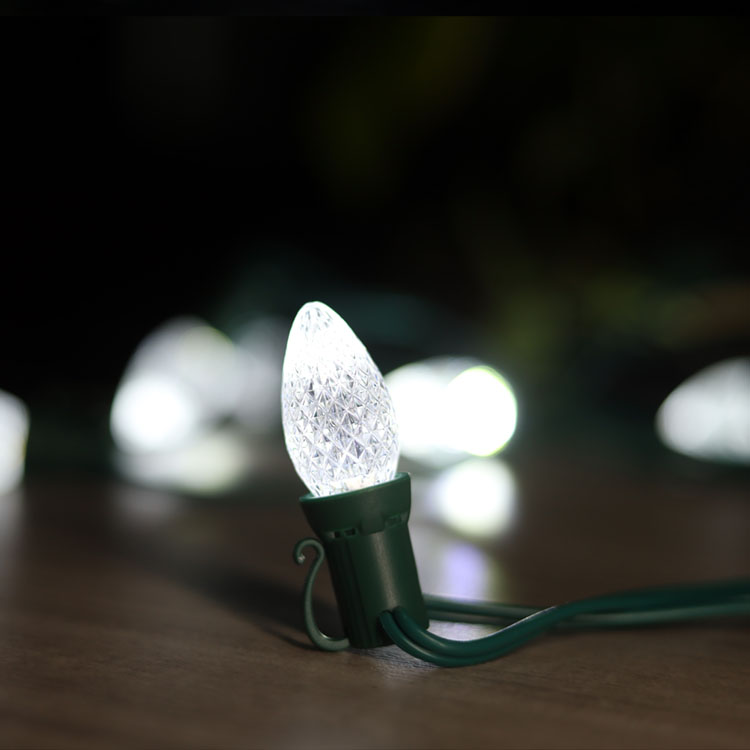
Pure white and cool white are not identical temperatures. Pure white sits between 4000K and 5000K. It offers a neutral, stark white with absolutely no yellow or blue undertones. It looks like fresh, untouched snow under midday sunlight. Cool white pushes past 5500K on the scale. It carries a distinct icy, blue tint that feels much colder. Retailers often use these terms interchangeably on packaging, which causes massive problems for field installers.
Buyers must verify the exact Kelvin rating before purchasing any inventory. Mixing them up drastically alters the intended mood of the installation. You might end up with a freezing icy look instead of a vibrant neutral white. If a client requests a clean, modern look, pure white is the correct choice. If they want a "winter wonderland" or "frozen" aesthetic, you must step up to the 5500K+ cool white range. Knowing this difference prevents costly tear-downs and re-installations.
Cool and pure whites demand very specific architectural pairings to look correct. They look ideal on modern homes featuring stark white trim. Gray or charcoal siding also complements these crisp, clean temperatures perfectly. The sterile light highlights sharp architectural lines and modern landscaping features. If you put cool white on a rustic log cabin, it looks entirely out of place and ruins the property's natural charm.
Professional installers heavily favor pure and cool white for commercial storefronts. Municipal displays use them for high visibility and an energetic, modern atmosphere. These temperatures cut through ambient city light easily. Streetlights and neon signs easily wash out warm white displays. Cool white punches through that light pollution, ensuring the holiday display remains highly visible from a distance. They integrate perfectly with cool-colored ornaments, enhancing blue, silver, and purple holiday themes flawlessly.
The C7 form factor excels in cool white landscape applications. It provides sharp, piercing points of light against dark backgrounds. We recommend cool white C7 LED replacement bulbs for high-contrast foliage wrapping. They easily create a striking winter wonderland aesthetic in outdoor parks. These bulbs also cut through high ambient light pollution. This makes them perfect for busy urban environments and commercial parking lots.
When wrapping evergreen trees in a commercial setting, cool white C7s create a brilliant, diamond-like effect. The crisp light draws immediate attention to the wrapped structure. Because the C7 bulb is smaller, you can achieve a higher density of light points per foot of wire. This density, combined with the piercing nature of the 5500K+ color temperature, results in a highly aggressive, attention-grabbing display that works perfectly for retail environments.
Color temperature creates a powerful optical illusion. Cool white often appears significantly brighter to the human eye. It looks more piercing and intense from a distance. However, the actual lumen output might be identical to a warm white bulb. Wattage does not change based on the color coating. The human eye simply reacts differently to blue-spectrum light. It perceives the cooler wavelengths as harsher and more luminous.
You must account for this perception when designing displays near bedroom windows or low-traffic residential streets. A cool white roofline might generate noise complaints from neighbors because the light feels invasive. A warm white roofline pushing the exact same lumens will feel softer and less intrusive. Always evaluate the viewing distance and the surrounding environment before committing to a high-Kelvin installation.
Accidental mixing on a single string creates a terrible patchwork effect. This looks unprofessional and visually jarring to anyone passing by. Strategic mixing requires deliberate, planned placement across different zones. You cannot alternate warm and cool bulbs on the same wire. The contrast is too sharp and breaks the visual line of the architecture.
Instead, utilize warm white C9s on the primary roofline to establish a cozy base. Then, use cool white mini-lights or C7s in the landscape below. This creates depth, contrast, and a vibrant focal point. The warm roofline grounds the house, while the cool landscape lighting draws the eye down to the foliage. Never mix color temperatures on the exact same architectural line. Keep the zones strictly separated to maintain a professional appearance.
Many people falsely believe color temperature affects power consumption. This is a very common industry misconception. Electrical load is dictated strictly by diode wattage and total string length. A cool white bulb does not use less power than a warm white bulb. The energy draw remains identical regardless of the hue.
You calculate your amperage load based on the bulb's wattage rating alone. Do not factor color temperature into your electrical capacity calculations. If a C9 LED pulls 0.8 watts, it pulls 0.8 watts whether it is 2200K or 6000K. Always verify your breaker capacity before plugging in long runs. Overloading a circuit causes breaker trips, regardless of how warm or cool the lights look.
Color Temperature | Kelvin Range | Best Architectural Pairings | Vibe / Atmosphere |
|---|---|---|---|
Sun Warm White | 2200K - 2500K | Historical homes, vintage displays, dark brick facades | Deep amber, nostalgic, antique, heavy glow |
Warm White | 2700K - 3000K | Natural stone, wood siding, indoor residential trees | Cozy, classic, inviting, traditional, soft |
Pure White | 4000K - 5000K | Modern architecture, stark white trim, commercial interiors | Stark, neutral, vibrant, clean, snow-like |
Cool White | 5500K+ | Commercial storefronts, gray siding, urban landscapes | Icy, high-contrast, energetic, piercing, aggressive |
LEDs age physically over time. Prolonged UV exposure from the sun impacts the diodes. High operational hours also degrade the internal components. This physical reality causes older warm white LEDs to slightly shift in color temperature. They may lose their initial golden hue and appear slightly faded or greenish. The phosphor coating literally bakes in the sun during daytime hours, altering its chemical structure.
When replacing bulbs in a 3-to-5-year-old string, avoid alternating new and old bulbs. The new bulbs will look significantly richer and brighter, highlighting the age of the older bulbs. Replace a whole section or an entire roofline segment instead. Move the older, functioning bulbs to a less visible area, like a side fence or backyard tree. This masks age-related color shifts effectively and maintains visual consistency on the primary focal points of the property.
Replacement bulbs must perfectly match your existing stringer wire base. Verify the socket size before ordering any new inventory. C7 bulbs require an E12 candelabra base to fit correctly. C9 bulbs require a larger E17 intermediate base. Forcing the wrong bulb into a socket damages the threading and creates a fire hazard. Always check the stamp on the wire or measure the socket diameter if you are unsure.
Long continuous runs often experience significant voltage drops. This causes noticeable dimming at the far end of the line. However, voltage drop only affects the brightness output. It does not alter the fundamental color temperature of the bulb itself. A warm white bulb will simply look like a dimmer warm white bulb. To mitigate voltage drop, avoid running more than 200 feet of continuous wire on a single plug. Break the runs up and use multiple power taps to ensure uniform brightness across the entire installation.
Warm white remains the definitive standard for traditional, cozy residential aesthetics and indoor trees. Pure and cool white serve high-contrast, modern, and commercial designs perfectly. Selecting the wrong color temperature ruins the architectural harmony of a property and wastes valuable installation time. Audit your existing inventory before making a purchase. Identify the specific Kelvin temperature or brand previously used. Verify the socket size to ensure perfect compatibility with your current stringers. Taking these technical steps guarantees a flawless, professional-grade holiday display.
Calculate your total linear footage to determine the exact number of bulbs required for the project.
Verify the maximum wattage capacity of your electrical breaker to ensure safe operation and prevent tripped circuits.
Order a 10–15% surplus of bulbs from the exact same manufacturing batch to future-proof your display against mismatched replacements.
Store all surplus bulbs in a climate-controlled, dark environment to prevent premature UV degradation of the phosphor coating.
A: "Clear" refers to the unpainted glass of traditional incandescent bulbs, which naturally produce a warm glow. The LED equivalent that replicates this exact cozy atmosphere is a warm white diode, typically ranging between 2700K and 3000K.
A: Yes, but it requires strategic placement. Avoid mixing them on the same string to prevent a jarring patchwork effect. Instead, use warm white on the roofline for a classic base and cool white in the landscape for high-contrast depth.
A: No. Color temperature has absolutely zero impact on power consumption. A cool white LED and a warm white LED of the exact same wattage will draw the exact same amount of electricity from your breaker.
A: Standard warm white sits around 2700K–3000K, mimicking a classic incandescent glow. Sun warm white is much lower on the Kelvin scale (2200K–2500K). This produces a richer, deeper amber hue ideal for vintage or historical displays.
A: Two factors cause this visual discrepancy: LED binning variances between different manufacturing batches and phosphor degradation. Prolonged UV exposure and extended use cause older LEDs to slightly shift in color over time.
A: Check the socket base on your existing stringer wire. C7 bulbs use an E12 candelabra base, which is smaller. C9 bulbs use an E17 intermediate base, which is noticeably wider and designed for larger roofline displays.


